If you’ve been treating email security as a “set it and forget it” job, 2025 is your wake-up call. The rules are changing. The deadlines are real. And the way organizations issue and manage S/MIME certificates will never be the same. In the last few months, the CA/Browser Forum’s S/MIME…
What is Business Email Compromise (BEC)? Business Email Compromise (BEC) is a relatively modern type of cybercrime that scammers use email schemes to deceive business employees and/or individuals with the purpose of financial fraud or obtaining important information. Usually, cyber attackers disguise themselves as CEOs, company partners, or other executives,…
Once Google reveals that it has been hacked, a shudder runs through all marketers, administrators, and C-suite executives. Quietly on August 5, 2025, the tech giant revealed that its attackers had drained customer data of one of its corporate Salesforce instances. Approximately 2.5 million Google Ads prospect records, including names,…
What is BIMI? BIMI, which stands for Brand Indicators for Message Identification, is an email specification that gives brands the ability to display their logo next to their emails when they appear in the recipients’ inboxes. It is a visual authentication of email, as well as making brands more recognizable…
You’re running a WooCommerce store. You’ve worked hard building trust with customers. Your review system is polished. A hacker injects malicious scripts into your website. Suddenly, your visitors are unknowingly exposed to malware, phishing attempts, or worse. A high-severity vulnerability (CVE-2025-5720) was recently discovered in the widely used WordPress plugin…
WordPress plugins are continuing to increase the usefulness of more than 40% of the web, but they are also increasing the attack surface for bad actors. In 2025, we will witness several high-severity vulnerabilities in common plugins such as AI Engine, Forminator, and WP Meta SEO, collectively affecting hundreds of…
What is SSL/TLS? Secure Sockets Layer (SSL) and its successor, Transport Layer Security (TLS), are cryptographic protocols for secure communication on a computer network. SSL/TLS are used on the internet to encrypt the data exchanged between a user’s browser and the web server, enabling sensitive data to remain secure and…
Ever wondered why your perfectly crafted emails vanish into the spam folder? You spent hours writing the perfect email. The subject line pops. The content is clean, persuasive, and even optimized for mobile. But somehow, the open rates are awful. And worse? Your email never even reached the inbox. That’s…
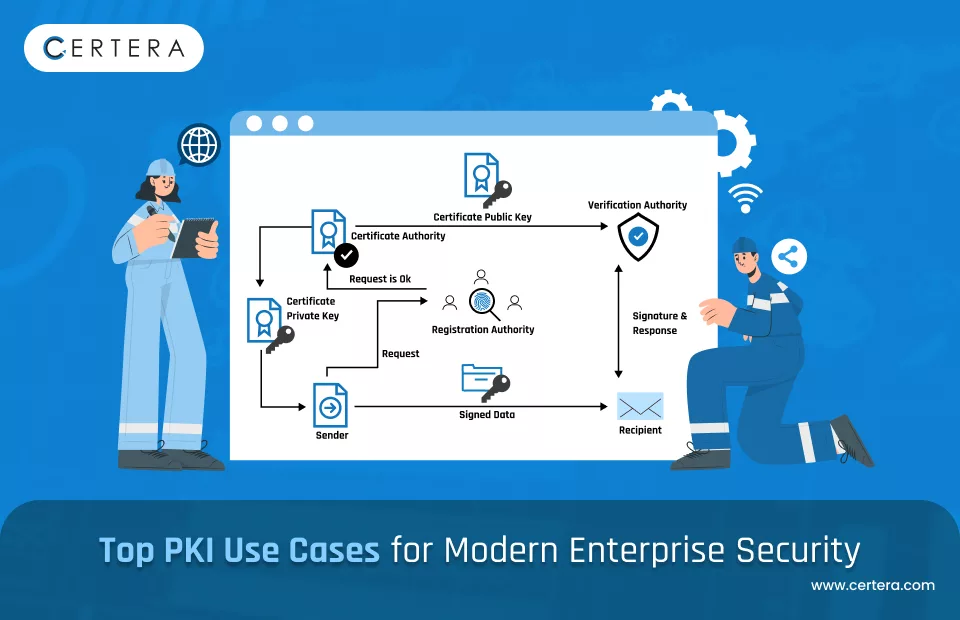
What is PKI? Public Key Infrastructure (PKI) is a security framework that enables secure digital communication, identity authentication, data integrity, and trust across networks. PKI is anchored in a pair of cryptographic keys, public and private, that encrypt and decrypt information, authenticate users and devices, and digitally sign communications or…
What Happened? A new zero-day vulnerability in Microsoft SharePoint Server, known as ToolShell, is being actively exploited. The flaw, CVE-2025-53770, is classified as critical and has already been exploited in monkey patches across federal agencies in the U.S., as well as in governments in Europe and the enterprise energy and…
Today, people’s lives are heavily surrounded by the internet and various technological applications, which makes protection more crucial than ever. When using a website or even browsing the internet, we should have the guarantee that the website is safe to use and our information is secure. This is why SSL…
Have you ever wondered how websites, emails, and digital transactions remain secure? Every time you log in to an online banking platform, sign an important document electronically, or visit a secure website (HTTPS), you’re relying on a system called Public Key Infrastructure (PKI). But wait, then what is Public Key…
You open a regular-looking email. Nothing suspicious, no attachments, no links, no typos. You click “Summarise this email” using Google Gemini for Workspace. And bam! A fake security warning pops up in the summary, telling you your Gmail password is compromised and urging you to call a support number. Except……
If you’re using PHP in your applications, it’s time to stop what you’re doing and check your version. Recently, security researchers disclosed two serious vulnerabilities in PHP that could allow attackers to perform SQL injection (SQLi) and denial-of-service (DoS) attacks. These issues affect widely used components, PostgreSQL and SOAP extensions,…
“One day. One certificate. Every single day.” Sounds like a security stunt, right? Nope. It’s Instagram’s new normal, and it’s about to rewrite how big tech thinks about trust on the web. Wait… did Instagram just change the rules of web security? Yes. While the rest of the internet is…